
From the reeds of the marsh to the cork oaks of the hills: discovering the Tuscan lake.
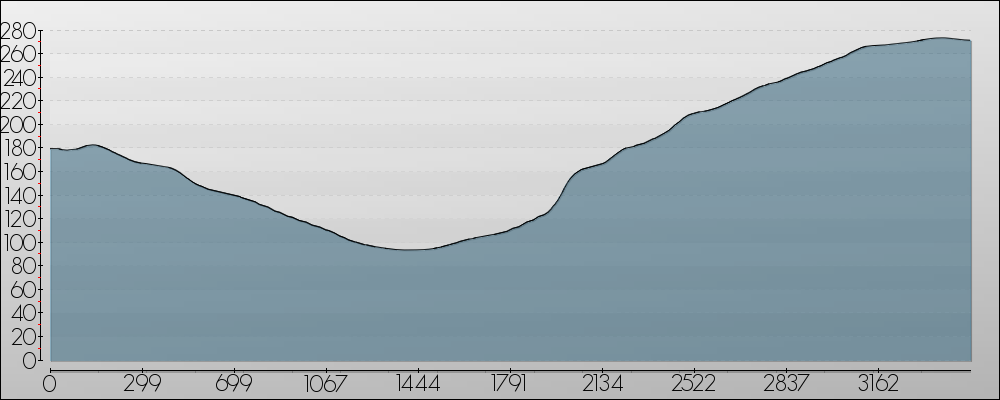
From Crocetta we take the very panoramic path on the lake and the coast towards Compignano, entering through centuries-old woods of Turkey oaks, chestnut trees and cork oaks. It is precisely these splendid specimens, which surround the dirt road, that give the name to our route. We continue to Compignano, always surrounded by vegetation, passing under Villa Hernandez and Villa Baldini, two other prestigious buildings. Villa Baldini, in particular, with its splendid Italian garden, hosted for a period Paolina Bonaparte, noblewoman and sister of Napoleon. Our itinerary continues towards our final destination, Compignano, where we arrive after walking along a cobblestone path that leads us to the church of San Frediano. The return to the starting point is by following the outward itinerary in reverse.
The sound of footsteps, rhythmic, makes the wooden beams of the walkway creak. All around, you can hear only the chirping of birds and the wind rustling the grass. We are in Versilia, that corner of Tuscany squeezed between the Apuan Alps and the sea, in the northern part of the region. A handful of kilometers from the busy Viareggio seafront, an ancient marshy area is home to a thriving animal and plant community: it is Lake Massaciuccoli, which with over 2,000 square kilometers of surface, forms the largest retro-dune wetland in Tuscany.
What is now a marshy lake was once a brackish lagoon that underwent a slow reclamation process. Human settlements developed around the basin as early as Roman times, still visible today in the archaeological area of Massaciuccoli Romana: here it is possible to visit the local archaeological museum and the remains of the Villa dei Venulei, built at the beginning of the 1st century AD, with its thermal complex in a position overlooking the lake and, further away, the coast.
In Massaciuccoli, near the archaeological area, flocks of birds find a home in the LIPU Oasis of Chiarone, established in 1979 together with the Park of Migliarino, San Rossore and Massaciuccoli. The marshy area is located in a geographical position that makes it an ideal transit and stopover point for a large variety of ornithological species, from the osprey to the black-winged stilt, from the elegant red herons to the rare glossy ibis.
On the other side of the lake is the village of Torre del Lago, a small hamlet famous for having been the refuge of the composer Giacomo Puccini, who moved here to a villa now dedicated to the museum that bears his name.
Around the lake there are paths and trails that lead into contact with the most evocative environments and represent a privileged point of view on those corners where the water gives way to the lands and marsh vegetation.
Photo by Shutterstock.com
 | Duration | 43 MINUTI (5 Km/h) |
 | Total Length | 3,6 KM |
 | Road surface | sterrato-asfaltato |
 | Difficulty | facile |
 | Technique | ★☆☆☆☆ |
 | Physical effort | ★☆☆☆☆ |
 | Liking | ★★★★☆ |
 | Landscape | ★★★★☆ |

where
43.838984°, 10.367703°
Directions
when
Always available
contacts
costs
ASK A QUESTION. Ask for more information
View the questions